

Adhesive vinyl is a popular choice for many brands and retailers because of its versatility, ease of install and endless design possibilities. It can be used on windows, walls, floors, vehicles and more to achieve your desired look. We sat down with Mark Snelling from Hasco Graphics along with other industry experts from our 40 VISUALS team to answer your top questions about vinyl film and adhesive technologies.


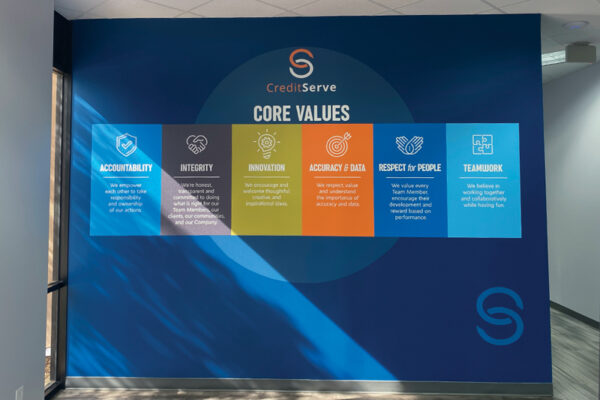
L-R: Brick wrap, adhesive vinyl, contour-cut adhesive vinyl, adhesive vinyl
What’s the difference between permanent and removable adhesive vinyl films?
Apart from the obvious, the difference between removable and permanent adhesive vinyl is that removable vinyl has an anchoring agent between the adhesive and the vinyl, whereas permanent film does not. The anchoring agent with removable vinyl is added with a second pass over the film and makes it possible to remove the vinyl after 1-2 years, sometimes more, with no damage to the surface. There are also high-tack and low-tack versions of removable adhesive vinyl. “Tack” refers to the strength of the adhesive bond, the higher the tack, the “stickier” it is. High-tack vinyl is better for longer-term vinyls whereas low-tack vinyl is better for shorter-term use. Various factors affect the clean removability of vinyl graphics depending on the type of adhesive, surface, temperature, environmental conditions and more.
What are the different types of adhesive vinyl?
Depending on the project and the surface the vinyl will be placed on, there are different types of adhesive liners, or different patterns with the adhesive backing, to create the perfect bond with a wall, window or floor. Let’s dive into a few of them:
Smooth – Regular adhesive liners have one smooth, solid sheet of adhesive to bond with the surface. This is typically the preferred liner because there is more adhesive on the vinyl to adhere to the wall, creating a stronger bond.
Dot Vinyl – Dot adhesive liners have small dots arranged on the liner to adhere with the surface. This type of liner can be more forgiving with installation.
Air Egress Vinyl – Air egress adhesive liners have a crosshatched pattern engraved in the paper liner. This creates small channels to push air out from the liner for a cleaner installation.
Static Cling – Static cling is a type of thin vinyl that does not use any adhesive to adhere or “cling” to a smooth surface. They are great for short-term use and can be peeled off and replaced multiple times without the need for professional installation.
What is the difference between self-adhesive and pasted vinyls?
Self-adhesive vinyls come pre-coated with a sticky backing, allowing for immediate application without the need for any additional adhesive. They are typically more user-friendly and easier to install. Pasted vinyls require an external adhesive or paste to be applied separately to the vinyl or the surface it’s being adhered to. This method is traditionally used for wall coverings and larger, permanent applications where a stronger bond is necessary.
Are vinyl graphics installed using a wet or dry process?
It depends on the surface the vinyl will adhere to. The most important thing is that the window, wall or floor is clean so the adhesive can fully bond with the surface. Wet installation is usually preferred for windows because the wet solution and any air bubbles can be easily be removed with a squeegee. Wet install is usually not recommended for walls because the porous surface of the wall would retain the wet solution, resulting in a weak bond with the vinyl. Read more about vinyl graphic installation.
Do you need to use heat to install adhesive vinyl?
It depends on the media, but usually heat is used when installing on rough textures and or in places where the media will be exposed to environmental factors, like rain, sun and extreme temperatures.
Can removable adhesive vinyl be repositioned after installation?
There are adhesive vinyl products that can be repositioned to a different surface after the vinyl is fully adhered, however many factors can affect the adhesion with the new surface, including the age of the vinyl, the surface it was originally placed on, location, complexity and cut of the vinyl and more. It’s usually better to install a new graphic than reposition an old vinyl, if the vinyl is repositionable.
Is temperature a factor when installing vinyl?
For installation, temperatures typically need to remain above 50 degrees Fahrenheit for a 24-hour period. After that period, the vinyl is fully adhered to the wall and the temperature can drop below 50ºF without affecting the vinyl. There are vinyl options available with adhesive rated for install down to -5ºF.
Will light from a window show through the vinyl?
It can, but this depends on the thickness of the vinyl adhesive media and the desired result. If this is a concern, there are products such as blockout backers to mitigate this.
What’s the difference between monomeric and polymeric vinyl films?
The terms “monomeric” and “polymeric” describe the type of plasticizer used in the vinyl, which improves the flexibility of the vinyl. Without a plasticizer, the vinyl films would crack and break if bent. Monomeric films use short-chain plasticizers, which makes them more suitable for shorter-term projects and are best for indoor applications but can be used outdoors. These films are typically rated for about three years but can last longer. Polymeric films, on the other hand, use long-chain plasticizers that bond with the film more efficiently. This makes polymeric films work well with both indoor and outdoor applications and these films are typically rated for five years but can last longer.


L-R: Brick wrap, ultra clear cling, adhesive vinyl, frosted adhesive vinyl
The world of adhesive vinyl signage is rich and diverse, offering many options suitable for a variety of applications. From the basic difference between monomeric and polymeric films to the intricate specifics of self-adhesive vinyl liners and installation techniques, the choices are vast. As with any project, understanding the material’s properties, its capabilities, and the requirements of your specific application will ensure optimal results. Whether you’re looking to display a short-term promotion indoors or a long-lasting advertisement outdoors, there’s an adhesive vinyl solution tailored to meet those needs. Our team of signage experts has the experience and knowledge to help you find the perfect vinyl product for your project.

Contact Us
Elevate your brand’s visibility and aesthetic appeal with our premium adhesive vinyl solutions. Our vinyl products seamlessly blend durability with stunning visuals to make an impact. Let our experienced team of signage professionals take your brand to the next level!
View Similar Blogs


