

As large video displays become more prevalent across retail stores, event spaces and other venues, technology is quickly evolving. Recent advancements in this display technology have improved the resolution, contrast, color accuracy, efficiency and affordability of these displays. One type of display leading the charge is direct view LED (DVLED), which offers significant advantages over traditional displays and is widely used for larger digital signage displays, like direct view LED video walls.
What is an LED?
Before we dive into direct view LED, it’s important to understand LED technology. LED stands for light-emitting diode and is a small electronic semiconductor that transforms electrical energy into visible light. The specific chemical compounds within an LED determine its color, brightness and efficiency.
In LED displays, each full-color pixel comprises red, green, and blue LEDs. By adjusting the intensity of these three colors, LEDs can produce a vast spectrum of colors in every pixel.


Image 1: Close-up view of an LCD screen. Image 2: Close-up view of a direct-view LED display.
What is Direct View LED?
Traditional LCD and LED displays have backlighting that shines through an LCD panel and a handful of filter layers to create each pixel. Direct view LED displays have an array of LEDs as the actual display pixels, which eliminates the need for an LCD panel, other filters or any sort of backlighting. This design results in exceptional contrast, vibrant colors, and brightness levels that surpass those of traditional displays. Additionally, DVLED displays can be constructed in virtually any size, making them suitable for both indoor and outdoor applications.


Advantages of Direct View LED vs. Traditional LED Screens
While both traditional LED screens (except OLED) and DVLED displays use LED technology, they differ significantly:
Size and Customization: DVLED displays can be assembled into larger sizes and custom shapes with direct view LED panels, offering greater flexibility for various applications. There are also many different pixel pitch options depending on the audience viewing distance.
Brightness and Contrast: DVLED technology provides higher brightness and contrast levels, improving visibility in well-lit environments such as outdoor settings, bright retail stores and trade shows.
Longevity: DVLED displays typically offer a longer service life compared to traditional consumer LED displays, ensuring durability and reduced maintenance over time.
Energy Efficiency: Depending on display settings, DVLED can be up to 75% more energy-efficient than LCD panels, contributing to lower operating costs.
Seamless Design: DVLED displays feature minimal to non-existent panel borders, creating a seamless viewing experience without visible seams.
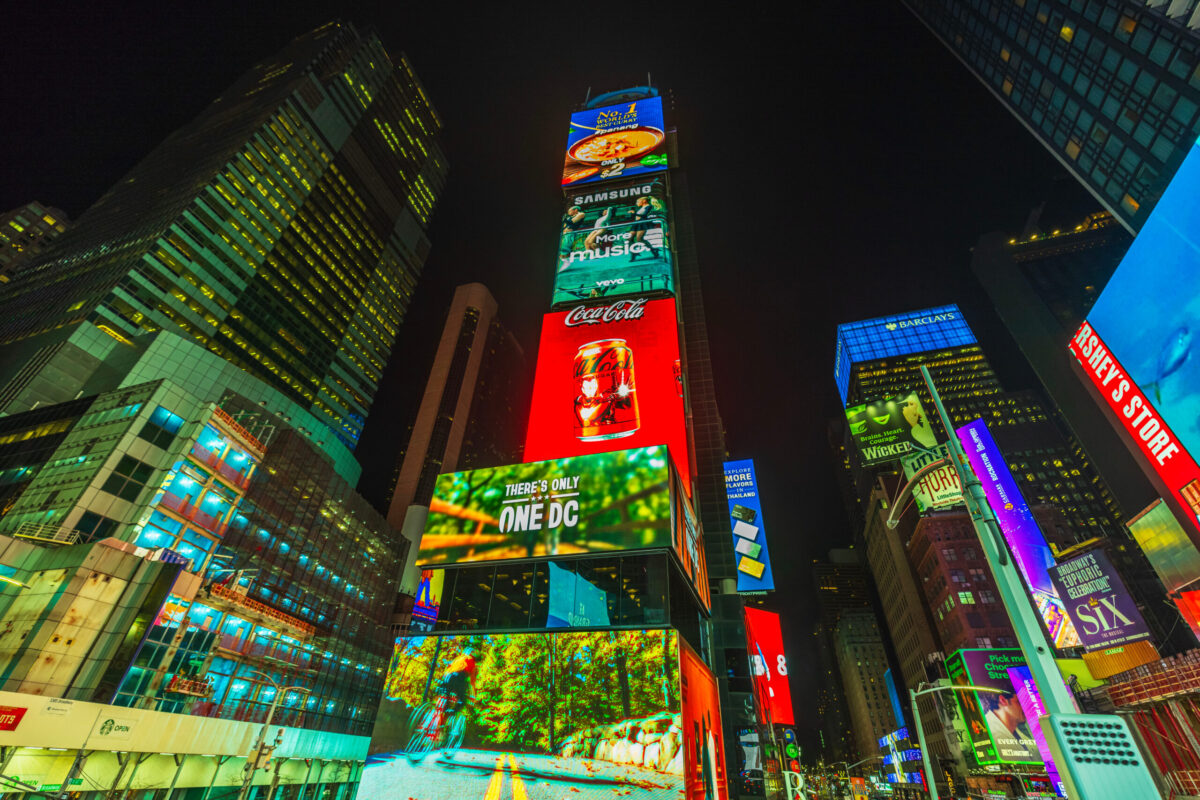

Direct view LED displays are popular for large video signage like in Times Square (image 1) and the Las Vegas Sphere (image 2). When viewed from a normal distance, the individual pixels are not visible and form a seamless image.
Direct view LED technology represents a significant advancement in digital signage, offering unparalleled brightness, contrast, and flexibility in design. Its energy efficiency and extended lifespan make it a compelling choice for businesses seeking impactful visual displays, like retail video walls. As this technology continues to evolve, it is poised to become the standard for digital signage across various industries. For more information on how direct view LED displays can improve your business’s visual presence, contact one of our digital signage enthusiasts today.
View Similar Blogs


