
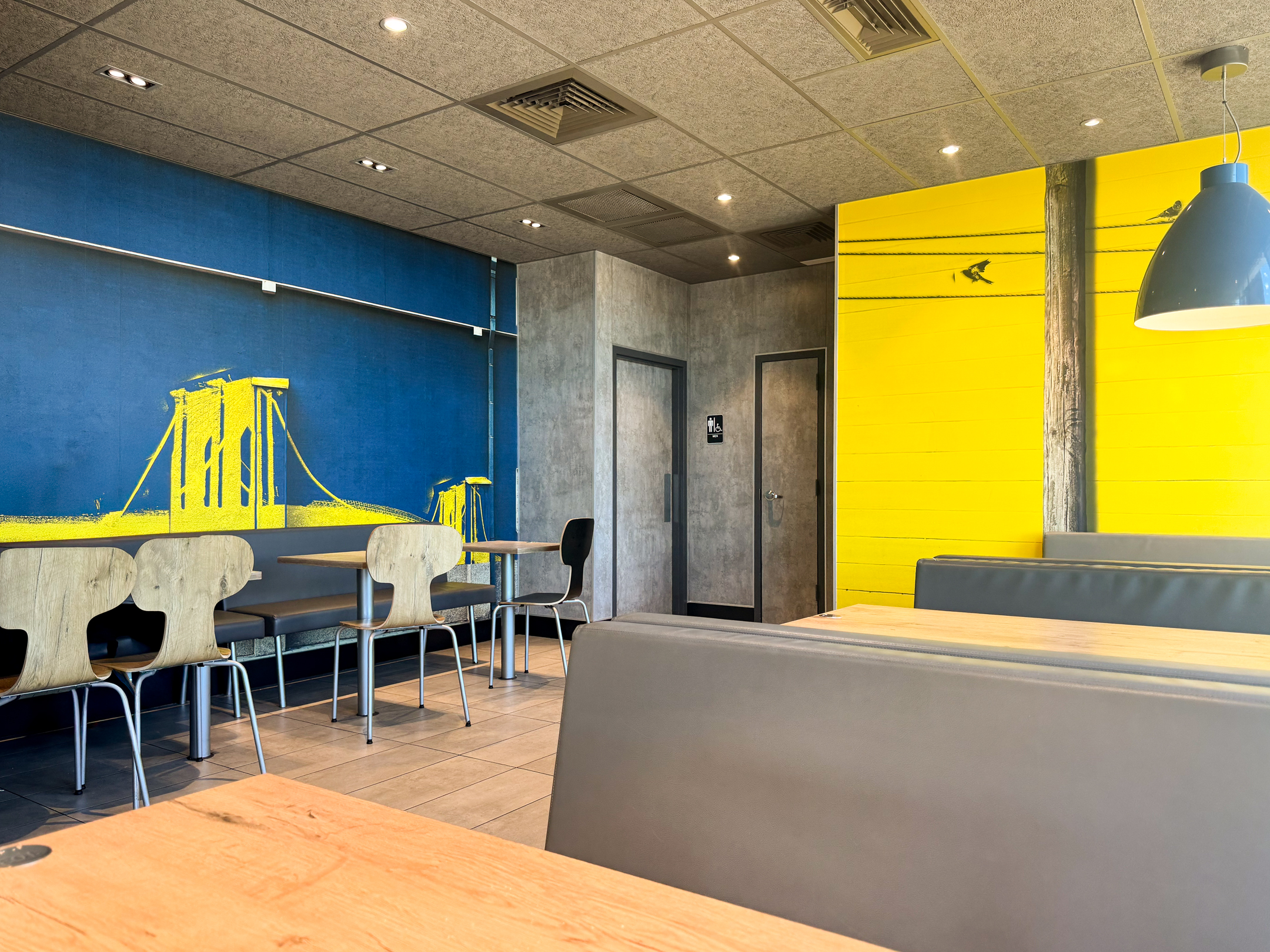
When you walk into a restaurant, you make instant judgments based on what you see, feel and smell. Research shows that interior design shapes first impressions, influences overall mood and helps create memorable stays. For fast food, fast casual and sit‑down restaurants, creating an inviting dining atmosphere directly affects how long people stay and how much they enjoy the food. This blog looks at a McDonald’s restaurant where a vinyl wall covering and architectural film project transformed a plain dining room into a welcoming space. You’ll learn how the pieces came together and why the right restaurant signage design and custom wall covering mural choices matter.

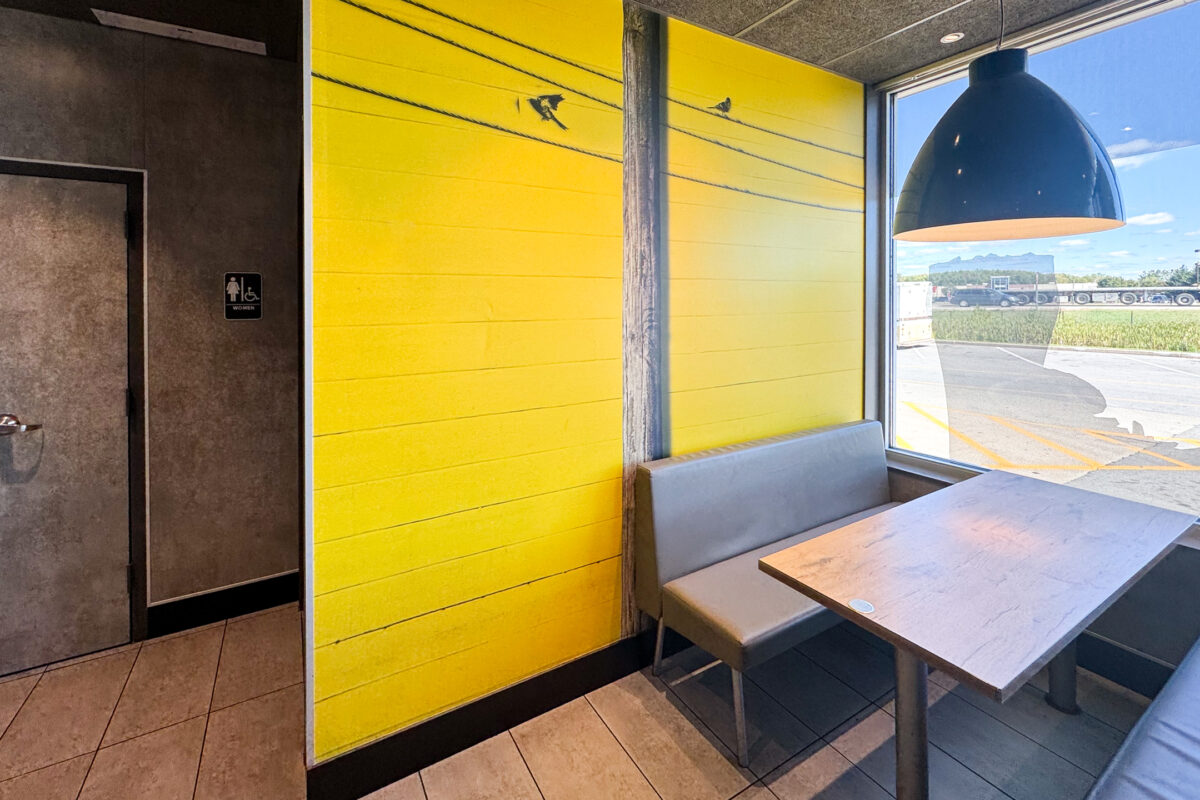
Custom murals and faux brick patterns create an upscape dining experience.
Wall Coverings Create an Inviting Atmosphere
McDonald’s started in 1940 as a small hamburger stand in California and grew into a global brand recognized by its golden arches. Using a combination of vinyl wall coverings and architectural films, this location created three focal areas: a blue wall with a yellow bridge graphic, a faux yellow brick wall and a faux corrugated metal wall featuring a payphone as artwork. These large commercial wall coverings bring visual interest to the space. Architectural films gave the walls texture, while other restaurant interior signage and custom restaurant signage created a branded space. The result is an upscale dining area where guests linger longer and enjoy their meals, proving that the right signage for restaurants can elevate even a quick‑service environment.

How Dining Room Design Influences the Restaurant Experience
Environmental psychology studies show that diners subconsciously respond to colors, lighting, layout, textures and sounds. Warm lighting encourages relaxation and longer stays, while energetic colors like red and orange can boost appetite. A well‑designed ambiance shapes emotions and spending habits; it can even encourage guests to order dessert or return with friends. In the hospitality industry, interior design shapes first impressions and influences mood. Fast‑food diners expect quick service but still appreciate comfortable seating and thoughtful decor, while casual and sit‑down restaurants often aim for more relaxed atmospheres. Using wall covering murals and thoughtful restaurant signage can set the tone and make your space memorable. When the dining room supports your brand story with cohesive graphics, guests feel valued and are more likely to come back.


Wall coverings and architectural films at this McDonald’s location add warmth and depth to the space.
This McDonald’s example demonstrates how a simple custom wall covering mural paired with architectural films and restaurant signage can transform a space. By telling a story through graphics, from a blue wall with a bridge to a faux brick feature, the design team created a cohesive atmosphere that aligns with the brand. If you’re planning a refresh, consider combining vinyl wall covering with restaurant interior signage to create a consistent look across walls, menus and wayfinding. Well‑designed custom restaurant signage and wall art help guests navigate your space and enhance their overall experience. You can start small with a single mural and build from there. Contact us to explore how our commercial wall covering and signage solutions can improve your dining room and deliver a better experience for your guests.


